
The S&P BSE Sensex and the Nifty50 have hit record highs amid the poll outcome-triggered bull frenzy at the bourses. Most analysts feel that the indices are on course to rise further over the next few months - till the general elections - albeit amid intermittent corrections - largely triggered by global developments. Bharatiya Janata Party's (BJP's) win in the three state elections of Madhya Pradesh (MP), Rajasthan and Chhattisgarh, analysts at Jefferies believe, reinforces the consensus expectations of a Modi win 2024 national elections with a greater likelihood of over 300 seats for the BJP.

'India's economy is growing faster compared to the developed economies of the world.' 'More importantly, it is growing faster compared to most of the developing economies.' 'The monsoon is not the only thing that drives the rural economy and certainly not the national economy.' 'It is too simplistic to reduce everything to the monsoon.'

Andhra Pradesh posted 8.14% consumer inflation in October.

El Nino, which refers to warmer-than-average sea surface temperatures in the central and eastern tropical Pacific Ocean, will likely to keep CPI inflation up at 8-10 per cent in the second half of 2014 and will pose a 50-70 basis point risk to this fiscal's growth expectation, the report by financial services major Bank of America Merrill Lynch said.

CPI inflation has declined by almost a percentage point from July, from close to eight per cent to just above seven per cent.

The new IIP series based on the new base year, is expected to lead to better capturing of ground data

Government's food subsidy bill tends to rise in tandem with the MSP increase.

A Reuters poll forecast the wholesale price index , India's main inflation measure, rose an annual 7.6 per cent in November, up from 7.45 per cent in October.

'The finance ministry and the RBI will never admit to the difficulties in the economy because if they do so, it will adversely impact the financial markets, etc.' 'They like to present a rosy picture that everything is fine and under control.'
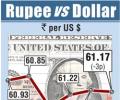
The rupee had gained seven paise to close at 61.15 on Friday on suspected RBI intervention in the forex market.

Economic affairs secretary S C Garg said that all macroeconomic parameters are performing well.

Friday's US data showed addition of 173,000 jobs in August.

Higher growth in vegetable demand relative to supply in the recent past has led to an upward trend in inflation, with spikes becoming more frequent. A study by rating agency Crisil found that vegetable inflation has been the most volatile in the food category, in fact. Inflation volatility is detrimental for both consumers and farmers and also sidetracks policymakers in the short term, necessitating frequent and repeated price-smoothing measures.

Historically, the IIP performance has shown little or no correlation to corporate performances.

With sales of cooling products turning out dismal this summer due to unseasonal rains, the stocks of related companies are now off their March highs. Shares of fan and air conditioner makers such as Voltas, Symphony, Orient Electric, Johnson Controls-Hitachi Air Conditioning and Crompton Greaves are down 5-23 per cent since March when the summer season saw a firm onset. In comparison, the BSE Sensex index is up 10 per cent.

Manufacturing companies have been outperformers on the bourses in the current year, leading to a rise in their weighting in the benchmark index. Companies in sectors such as FMCG, automobile, pharmaceuticals, metals, cement, and agrochemicals now account for 25.43 per cent of the Nifty 50 index, up 88 basis points from 24.55 per cent at the end of December last year and a record low of 23.1 per cent at the end of CY20. The manufacturing sector is now dominated by FMCG majors such as Hindustan Unilever, ITC, Asian Paints, Nestle, and Britannia, accounting for 45 per cent of the combined market cap of all manufacturing companies in the index.

In May 2019, the food inflation was 1.83 per cent as per the full CPI data released for that period.

Life Insurance Corporation of India (LIC) February 8 for the first time ever crossed the Rs 7 trillion market capitalisation, as the stock price of state-owned insurer hit a new high of Rs 1,144,45, on rallying 10 per cent on the BSE. The board of directors of the Corporation are scheduled to meet today i.e. February 8, 2024, to consider a proposal for declaration of interim dividend for the financial year 2023-24 (FY24). The board will also consider and approve the unaudited financial results for the quarter and nine-month period ended on December 31, 2023.

The Reserve Bank has taken some steps to shore up the domestic currency.

The manufacturing sector, which accounts for over 75 per cent of the index, declined by 2.4 per cent against a growth of 4.1 per cent in December 2014.

Financials declined amid profit taking while energy shares fell after the government hiked excise duty on transport fuels.
The wholesale price index based inflation rose to 12.44 per cent for the week ended August 2. Wheat has a weight of 1.38 per cent in the index. The department of economic affairs and the department of food and public distribution are in favour of selling 4 million tonnes wheat.

Improved credit profile may make you eligible to transfer your existing home loan to another lender at a much lower rate.

A majority of the Indian consumers are bullish about their financial situation in the next one year, but have raised concerns over rising cost of goods and services, which is affecting their purchasing decisions, according to an EY report. Moreover, uncertainty around managing rising living costs is driving over 80 per cent in India to save more money, said the findings of the ninth edition of the EY Future Consumer Index for India. The Index for India reaffirms the "positive outlook" of the Indian consumers as 77 per cent expect positive changes in the financial situation, in the next one year.

India's gross domestic product growth rate slipped to 7%.

In its 'Asia Economic Alert', the banking and asset management behemoth also said that the Reserve Bank is likely to hike the short-term lending (repo) rate by 100 basis points in 2011 with the purpose of curbing inflationary pressure.

Rajan had said that there was lack of clarity about the new method.

During the month, inflation in vegetables shot up to 35.99 per cent, as against 26.10 per cent in October. Likewise, the prices of cereals and eggs grew at a faster pace of 3.71 per cent.

The 6-member Monetary Policy Committee, headed by Reserve Bank of India Governor Urjit Patel, in its fifth bi-monthly review, kept the repo rate unchanged at 6 per cent and reverse repo at 5.75 per cent.

Evidently, households see a brighter future after the Budget, reveals Mahesh Vyas.

Most of the cities on the list have a lot to explore and the offered accommodation in these areas are economical with highly rated services, according to trivago's 'Best Value City Index 2015'.

Analysts are expecting inflation to fall further in October and November on base effect. Inflation measured by consumer prices has been trending down for over four months, and came in at 6.7 per cent in September.

India's factory output climbed 22.4 per cent in March, benefiting from the base effect of the lockdown-marred month a year back as well as a turnaround in the manufacturing sector, while retail inflation slipped to a three-month low of 4.29 per cent in April. The high positive annual growth in the index of industrial production (IIP) in March 2021 came on back of a contraction of (-)0.9 per cent and (-)3.4 per cent in January and February 2021 respectively, according to the data released by the National Statistical Office (NSO) on Wednesday. This turnaround was led by recovery in the mining, manufacturing and electricity sectors.

The government is likely to name a successor to Rajan sometime this month

The combination of sanctions, and low fuel prices is really hurting the Putin regime.

The Reserve Bank's rate-setting panel began its three-day deliberations on Monday to decide the next monetary policy amid expectations that the central bank will maintain status quo on the benchmark interest rate in the backdrop of global scare due to the new coronavirus variant Omicron. Reserve Bank Governor Shaktikanta Das headed six-member Monetary Policy Committee (MPC) is scheduled to announce the policy resolution on Wednesday. If the RBI maintains status quo in policy rates on Wednesday, it would be the ninth consecutive time since the rate remains unchanged.

A reversal of policy at this juncture could jeopardise the recent gains on inflation

Movement of rupee and crude oil prices will also dictate the trend

Reiterating his earlier stance, BJP's Rajya Sabha member Subramanian Swamy has written a letter to Prime Minister Narendra Modi, asking him to sack RBI Governor Raghuram Rajan.

India's GDP growth to reach 8% by 2017. says World Bank
 © 2026 Rediff.com - Advertise with us - Disclaimer - Privacy Policy - Sitemap - Feedback - About us - Terms of use - Grievances